|
|
High-precision ultrasonic spraying machine

Collect
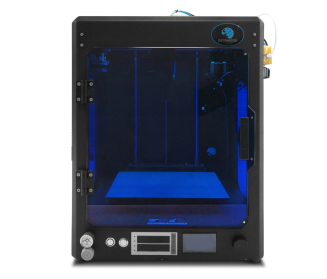
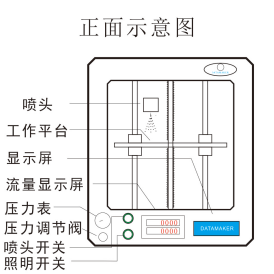
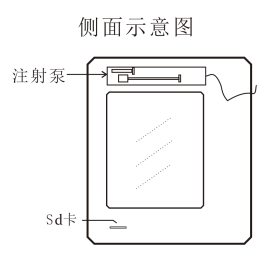
Figure 2: Front view of the actual object Figure 3 Introduction to host structure 2.1.1 The nozzle section uses ultrasonic high-frequency vibration to atomize the liquid into uniform micro-nano particles, reducing the nozzle pore size requirements and lowering the risk of nozzle clogging. 2.1.2 The system provides multi-stage adjustable ultrasonic power, which can improve the uniformity of liquid particle distribution and further enhance the uniformity of the coating after spraying. 2.1.3 High-precision ultrasonic nozzles can achieve extremely low stable flow rates, enabling minimal loading on the substrate to achieve thinner film coatings. 2.1.4 The ultrasonic nozzle acts without any pressure on the liquid. By using a high-precision metering pump, the flow rate of the coating liquid for atomization spraying is controlled, thereby achieving high-precision spraying flow control. 2.1.5 High-precision polypropylene or polyethylene delivery pumps, combined with microchannel designs of ultrasonic nozzles, can achieve microliters per second control accuracy, aiming for excellent control of material load on substrates per unit time. 2.1.6 Ultrasonic nozzles require only a tiny amount of gas at the kilopascal level, producing almost no liquid rebound or splashing during spraying, increasing paint utilization to over 90%. 2.1.7 Under air convection, atomized droplets usually scatter and drift. The flow guide device reduces air interference and achieves directional focusing to achieve the desired coating effect. 2.1.8 To ensure stable flow flow within the set working range, independently developed liquid delivery pumps, solution pipelines, and nozzle delivery systems combined with three-dimensional high-precision transmission modules. 2.1.9 The three-dimensional transmission module uses the PLC as the system control core. By controlling the stepper motor and stepper motor driver, the nozzle moves within a certain three-dimensional space under precisely manufactured light rods and synchronous belts. 2.1.10 The conveyor device controls the motor through a high-precision driver, enabling adjustment of the nozzle's movement speed. 2.2 Software Features 2.2.1 Visualization and control of various parameters (nozzle position, nozzle height, spray flow rate, injection rate, ultrasonic power, etc.). 2.2.2 Offline programming, simple programming, can save over 100 sets of programs simultaneously, meeting spraying needs of different sizes and processes.
Performance characteristics• No manual spraying required, staying away from toxic environments • Programs can be written independently to fully automate high-precision spraying • The effective working area of the three-dimensional worktable is up to 300mm*300mm, with a spraying distance of 200mm • Precise film thickness control, with accuracy reaching the nanometer level • Can be coated with various materials with different viscosities • Excellent coating consistency: usually better than ±5% • High efficiency / high material utilization: material utilization can reach 99% • Capable of meeting diverse needs: from R&D to pilot testing and mass production • The process offers high reliability and repeatability • Integrated equipment, small footprint, easy to handle Application areas• Thin-film photovoltaic cells • Thin-film solar coatings • Perovskite solar cells • Solar cells • Graphene coating • Silicon photovoltaic cells • Fuel cells
Technical specifications
|
||||||||||||||||||||||||||||||||||||||||||||||||||